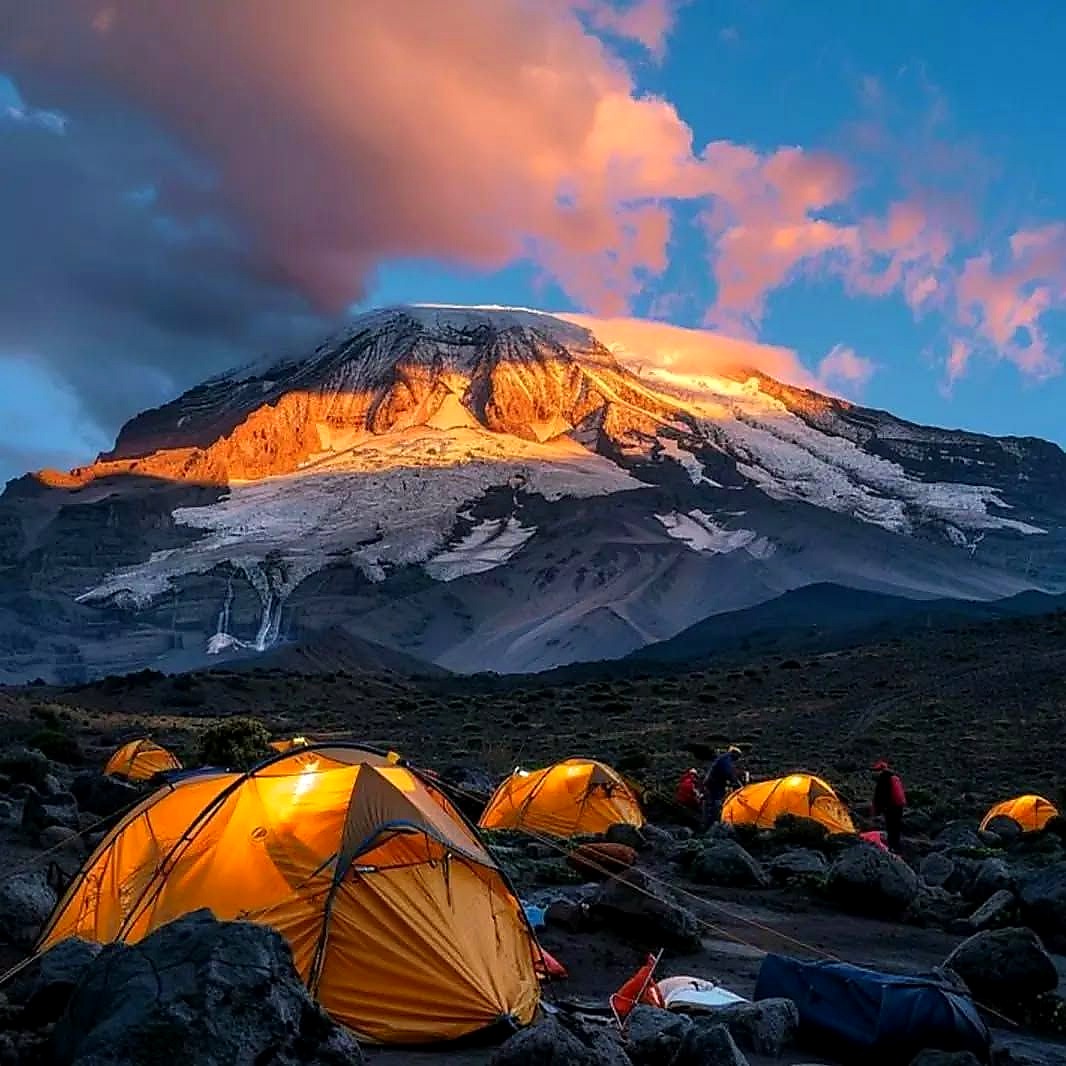
At 5,895 metres, Mount Kilimanjaro is the highest free-standing mountain on earth and Africa's greatest trekking objective. The route you choose determines your experience — here's how to decide.
Marangu Route — The Coca-Cola Route
6 days · Easiest terrain · Success rate ~50%. The only route with hut accommodation rather than tents. The most direct and most overused route. Despite its reputation as the easiest, its aggressive acclimatisation profile gives it the lowest summit success rate of any route. Best for: trekkers who want hut comfort and have prior high-altitude experience.
Machame Route — The Whiskey Route
7 days · Moderate-challenging · Success rate ~85%. The most popular route for good reason — spectacular and varied scenery, excellent acclimatisation with a high-camp approach, and a dramatic summit push via the Southern Circuit. This is our recommended route for most trekkers.
Lemosho Route — The Scenic Favourite
8 days · Moderate · Success rate ~90%. The longest and most remote route, approaching from the west and joining the Machame route near the summit. Outstanding forest and moorland scenery, excellent acclimatisation and the highest success rate among the standard routes. Best for: those who want the finest overall experience.
Rongai Route — The Northern Approach
7 days · Moderate · Success rate ~85%. The only route approaching from the north (Kenya border side). Drier and less crowded than Machame, with a distinct landscape and unique summit approach. Best for: those who prefer a quieter, more remote experience, and those travelling in the rainy season.
The Real Challenge — Altitude
Technical difficulty is not what stops most Kilimanjaro climbers — altitude sickness is. The slow, steady pace of longer routes (Lemosho, Northern Circuit) dramatically improves summit success rates. Walk slowly (pole pole in Swahili), stay hydrated, and don't ignore early signs of altitude sickness. Diamox is worth discussing with your doctor before departure.
When to Climb
The best months are January–March and June–October — the two dry seasons. July, August and September are peak months with clear summit views. December and early January can be cold but offer stunning snow-covered crater views. Avoid April–May (long rains) when trails become extremely muddy and summit views are often obscured.
Ready to Make This Happen?
Talk to the Levine Adventures team — we handle every detail so you can focus on the experience.